"Ergonomic" gets used loosely in pillow marketing, so it's worth asking what the benefits actually are and what's backing them up. This guide breaks down the sleep and posture benefits of an ergonomic pillow the way the research describes them, and how a design like the Derila Ergo Pillow puts those ideas into practice.

The cervical spine has a gentle forward curve, and keeping that curve supported — rather than flattened by a too-thin pillow or over-arched by a too-thick one — is the central idea behind cervical alignment research. Studies on pillow height describe this curve as central to reducing stress on the discs between neck vertebrae and to relaxing the surrounding muscles overnight.
An ergonomic pillow is built around exactly this principle. The Derila Ergo Pillow uses a lower center channel so the neck can settle into its natural curve instead of being pushed straight, with raised wings on either side to catch the head and shoulder as you turn. That's a meaningfully different job than a flat, uniform pillow is designed to do.
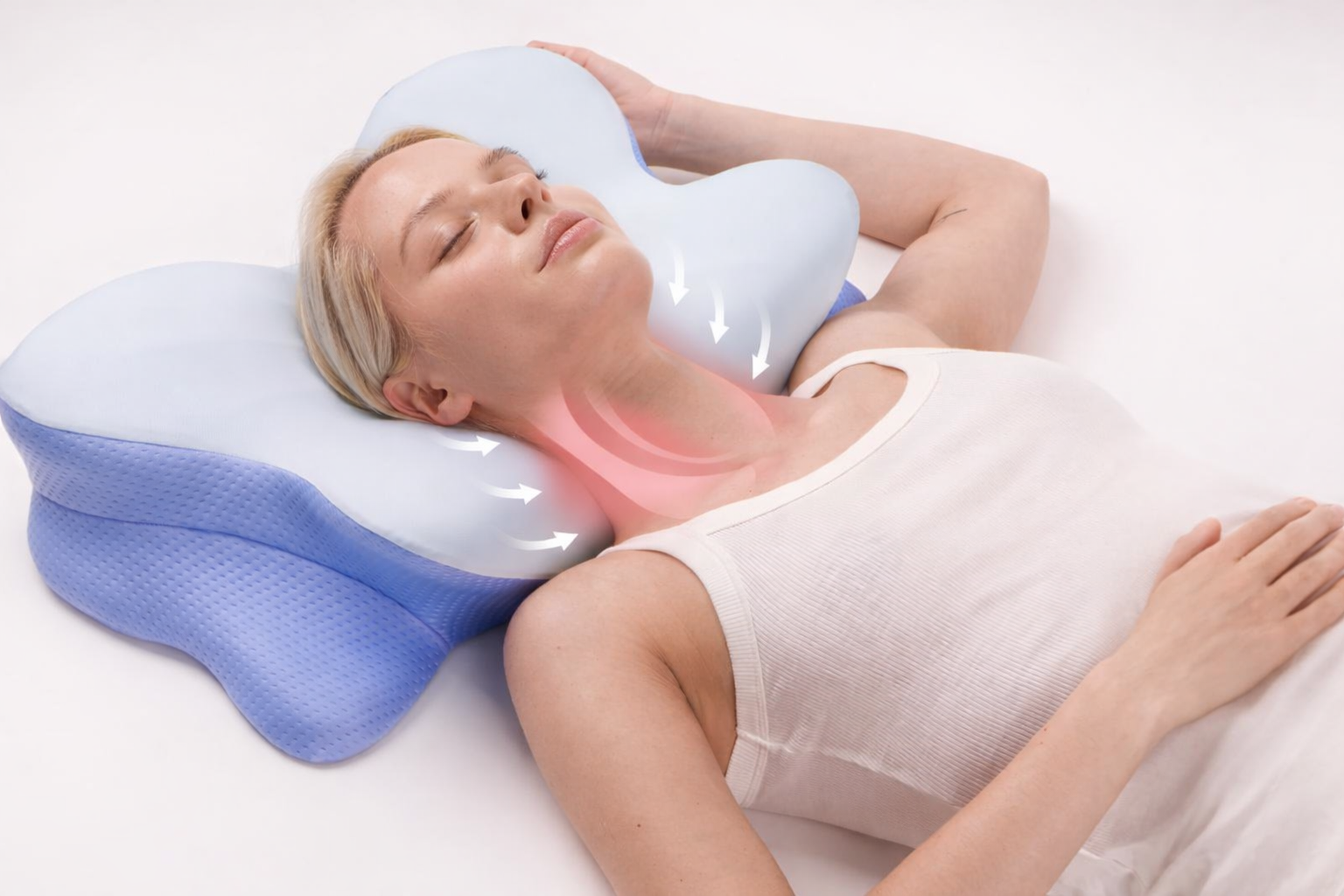
Clinical research on cervical and ergonomic pillows has looked specifically at people with existing neck pain, using standard measures like pain intensity scales and neck disability indices. A randomized controlled trial on an ergonomic latex pillow found that an ergonomic design helped protect the neck's natural curve during sleep and was associated with measurable improvements in posture and reduced muscle fatigue over the study period, compared with a standard pillow. Other longer-term tracking of ergonomic pillow use has reported continued improvements in pain and sleep quality scores over many months of consistent use, particularly among older adults, suggesting the benefit builds gradually rather than overnight.
None of this means an ergonomic pillow is a medical treatment, and it isn't a substitute for professional care if you have a diagnosed cervical condition. What the research does support is a reasonable, non-drug way to reduce the sleep-posture component of everyday neck stiffness — which is exactly the gap Derila Ergo Pillow is designed to fill for people without a diagnosed spine condition.
Discomfort during the night doesn't just feel unpleasant — it fragments sleep. Repeatedly shifting to find a comfortable neck position pulls you out of deeper sleep stages, even if you don't fully wake up or remember it in the morning. Research using standard sleep-quality questionnaires has found that switching to a supportive, well-fitted pillow is associated with improvements in reported sleep quality and reduced nighttime disruption, alongside reductions in morning pain and stiffness.
Posture research on forward head posture — the common pattern where the head sits too far forward relative to the shoulders — has found this pattern can be reinforced by the position the neck holds for hours every night. Some clinical studies on ergonomic pillow use have measured a reduction in forward head posture angle after a period of consistent use, alongside improved neck muscle endurance during the day. The proposed explanation is straightforward: a neck that spends its nightly rest period in a well-aligned position isn't starting each day from a compromised baseline, and muscles that aren't fatigued from compensating overnight have more capacity for good posture while you're up and active.
This is a slower, cumulative benefit rather than an instant fix, which is consistent with what longer studies on ergonomic pillow use have reported — meaningful improvement tends to show up over weeks and months of regular use, not the first night.
Some people notice less morning stiffness within the first week, but research on ergonomic pillow use suggests the fuller posture and pain benefits tend to build gradually over weeks to months of consistent use.
Both, according to available research. Comfort improvements tend to show up first, while measurable posture changes, such as reduced forward head posture, have been reported with continued use over time.
It can help with sleep-posture-related stiffness for many people, but it isn't a medical treatment. If you have a diagnosed neck or spine condition, check with a doctor or physical therapist alongside any pillow change.
 Derila Ergo Pillow