This guide covers everything worth knowing before buying an ergonomic pillow: what the term actually means, the science behind cervical support, how to match a pillow to your body, how to care for it, and where a specific design like the Derila Ergo Pillow fits into the bigger picture.
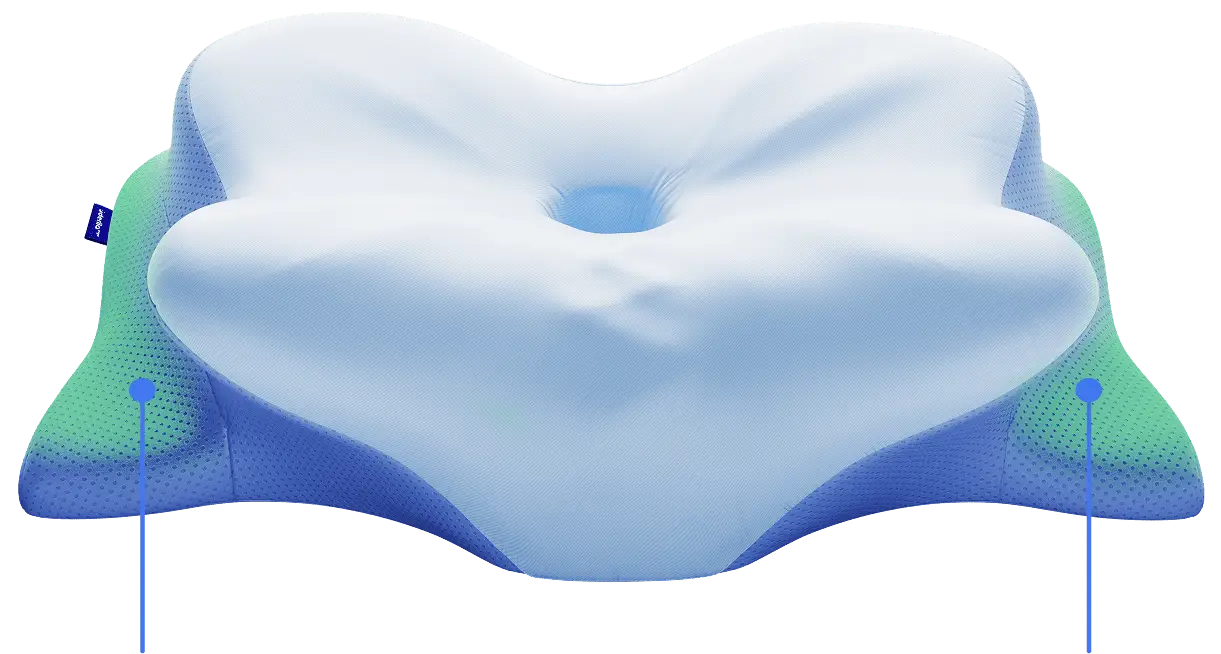
An ergonomic pillow is a pillow engineered around the shape and support needs of the head, neck and shoulders, rather than a flat, uniform block of fill. The goal is to keep the spine in a neutral line during sleep — the same natural alignment your body holds when standing with good posture — instead of letting the neck bend, twist or hyperextend for hours at a time.
In practice, that usually means three design choices working together: a contour or shape that matches the curve of the neck and the gap created by the shoulder, a core material that holds its shape under the weight of the head, and a height (loft) calibrated to a specific sleep position. The Derila Ergo Pillow is a clear example of this approach: a butterfly-contour shape with a center channel for the neck and raised wings for the head and shoulders, built from a high-density, slow-rebound memory foam core so the contour doesn't collapse overnight.
Sleep researchers and physical therapists describe the cervical spine's natural forward curve as lordosis, and maintaining that curve during sleep is considered important for reducing pressure on the discs between neck vertebrae and letting surrounding muscles relax. Studies that measure pillow height scientifically have found it directly affects cervical alignment, contact pressure under the head, and muscle activity in the neck — with poorly matched pillow height linked to increased muscle tension and disrupted sleep.
Clinical trials on ergonomic and cervical pillows have reported reductions in neck pain intensity and disability scores, along with improvements in standard sleep-quality questionnaires, when people switched from a standard flat pillow to a shaped, supportive one. Some research has also linked consistent ergonomic pillow use to improvements in forward head posture over time, suggesting the nightly support carries over into daytime posture as well.
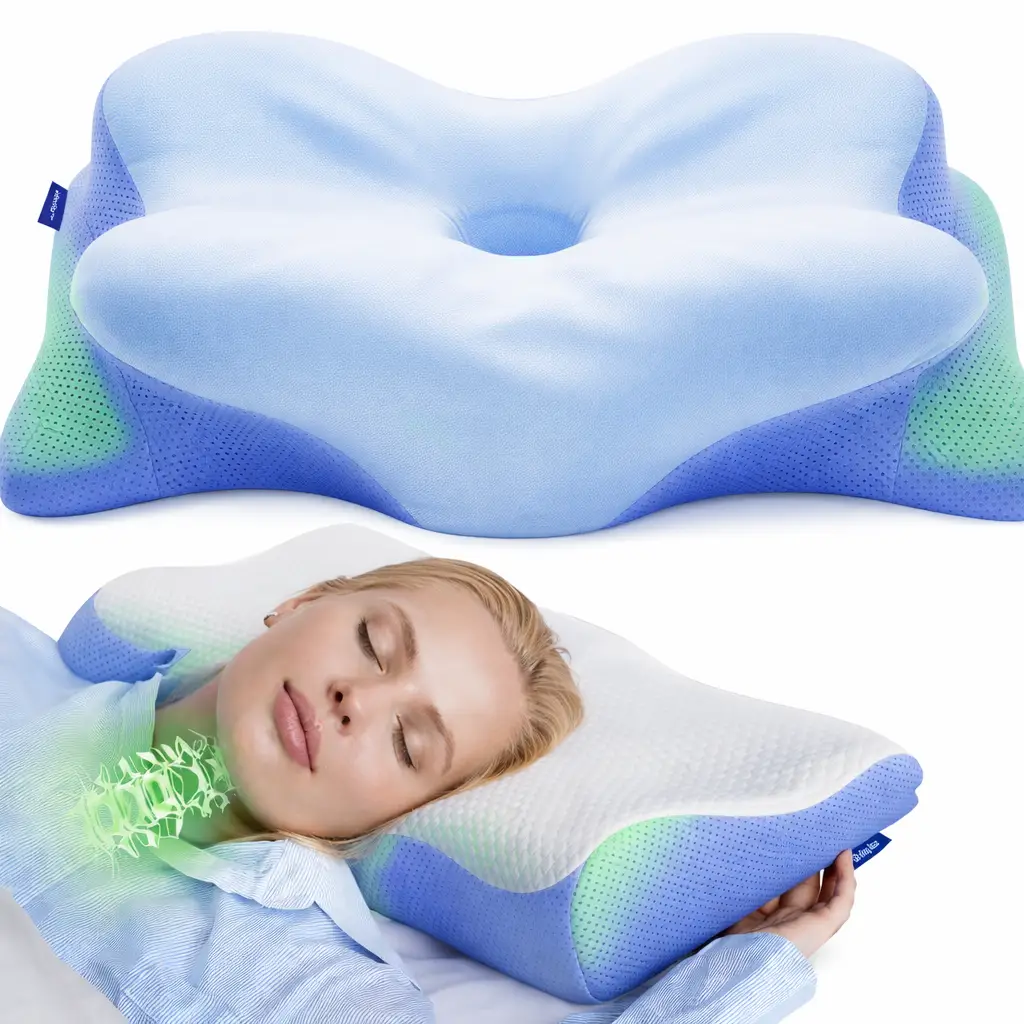
"Ergonomic pillow" isn't one single product category — it covers several shapes and materials, each suited to slightly different needs.
Once you understand the types, the next step is matching loft and firmness to your specific sleep position and frame. This is where most people either get it right or waste money on a pillow that never quite fits.
| Factor | Why It Matters | What to Do |
|---|---|---|
| Sleep position | Determines the gap between head and mattress that the pillow needs to fill | Side: high loft. Back: medium loft. Stomach: low loft or none. |
| Shoulder width | Broader shoulders create a bigger gap for side sleepers | Broad-shouldered side sleepers should size up in loft |
| Mattress firmness | A soft mattress lets the shoulder sink in, reducing loft needed | Firmer mattress → slightly more loft; softer mattress → slightly less |
| Material | Determines how well the pillow holds its shape under weight | Choose memory foam or latex, like Derila Ergo Pillow, if you want consistent nightly support |
Even the best-designed ergonomic pillow needs proper care to keep supporting your neck the way it's supposed to.
Firmness alone doesn't guarantee proper alignment. Shape and loft matched to your sleep position matter just as much as how firm the material feels.
Research consistently points to pillow height as one of the biggest levers for cervical alignment — more so than material brand or price point alone.
Firmer, contoured pillows often need a short adjustment period as neck muscles adapt to a new support pattern.
Side, back and stomach sleepers each need meaningfully different loft — there's no universal "one loft fits all" pillow.
An ergonomic pillow is specifically shaped and sized to support the neck's natural curve and fill the shoulder gap for your sleep position, rather than just being a firm, flat cushion.
Not necessarily. Contoured designs like Derila Ergo Pillow are built to reasonably accommodate both side and back sleeping, which covers most combination sleepers.
Watch the pillow itself rather than the calendar — visible flattening, loss of contour, or returning morning stiffness are the real signals it's time to replace it.
No. It can reduce sleep-posture-related strain, but diagnosed cervical or spinal conditions should be managed with a doctor or physical therapist.
 Derila Ergo Pillow