Waking up with a stiff neck usually isn't bad luck — it's a mismatch between your pillow and how you actually sleep. This guide walks through the real factors that decide whether an ergonomic pillow supports your neck properly, and where a design like the Derila Ergo Pillow fits into that picture.
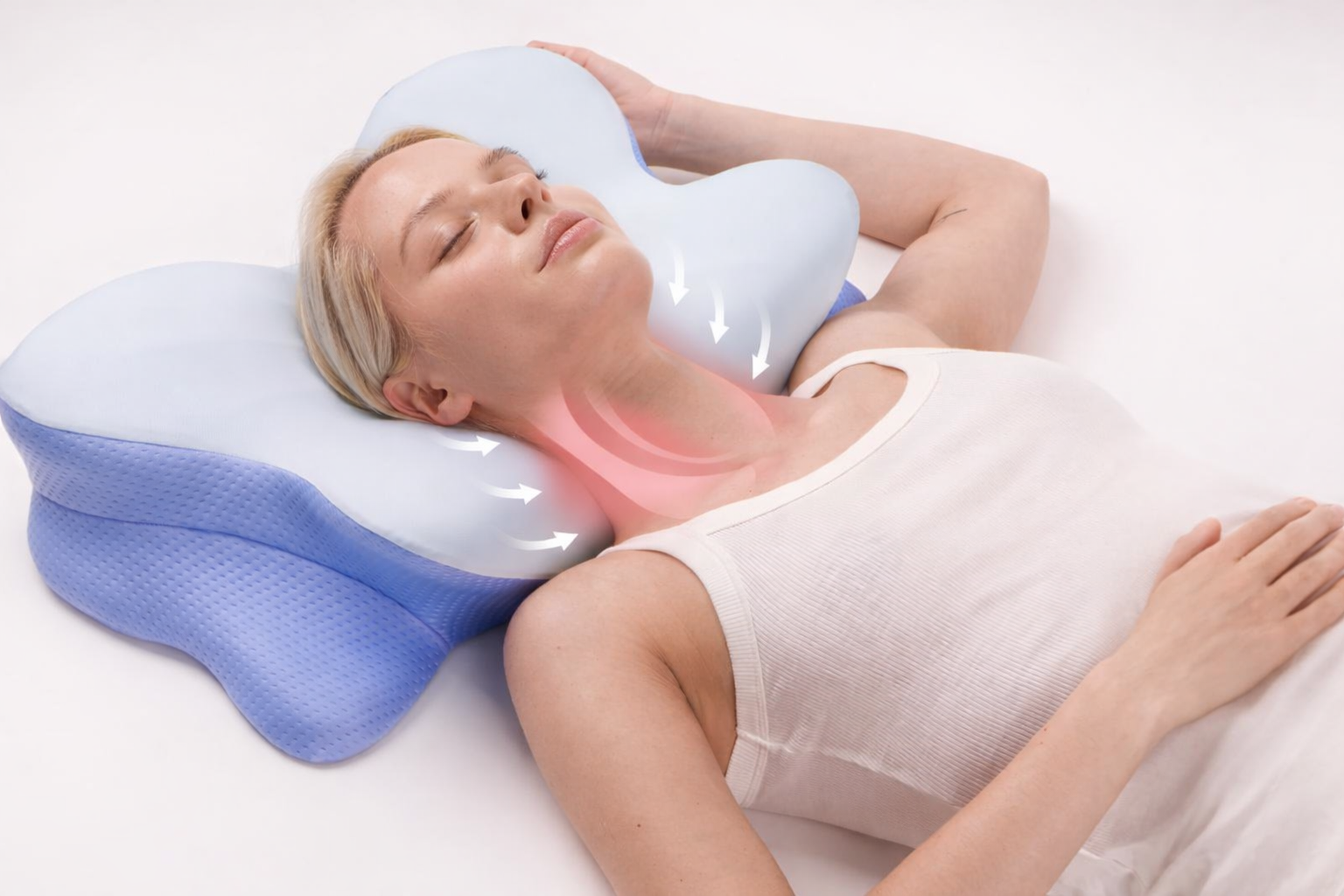
You spend roughly a third of your life asleep, and for all of those hours your pillow is the one product in constant contact with your neck and cervical spine. Researchers who study cervical alignment describe the neck's natural curve — called lordosis — as something that needs to stay supported rather than flattened or over-arched for long stretches at a time. When a pillow holds that curve properly, the surrounding muscles can actually relax instead of working all night to compensate. When it doesn't, that low-level muscular effort adds up, which is a big part of why so many people wake up with tightness between the shoulder blades or a dull ache at the base of the skull.
This is exactly the problem an ergonomic pillow is designed to solve. Instead of a flat, uniform rectangle, an ergonomic pillow uses shape, height and material to keep the head, neck and shoulders in a straight line, whatever position you sleep in. The Derila Ergo Pillow approaches this with a butterfly-contour shape: a lower center section for the neck and raised outer wings for the head and shoulder line, so the design does the alignment work instead of asking your muscles to.
Before you look at brands or materials, the single biggest factor in choosing the right ergonomic pillow is the position you sleep in most of the night. The gap between your head and the mattress is completely different depending on whether you sleep on your side, your back, or your stomach, and pillow height (called "loft") needs to fill that exact gap — no more, no less.
| Sleep Position | Recommended Loft | What to Look For |
|---|---|---|
| Side sleeper | High (around 4–6 in / 10–14 cm) | Enough height to bridge the shoulder-to-ear gap, firm enough to resist flattening |
| Back sleeper | Medium (around 3–5 in / 7–10 cm) | Gentle support under the neck curve without pushing the chin toward the chest |
| Stomach sleeper | Low (under 3 in / 7 cm) or none | The thinnest pillow that's still comfortable, to limit neck rotation |
| Combination sleeper | Medium-high, adaptable | A contoured shape like Derila Ergo Pillow that supports more than one position reasonably well |
If you split your time fairly evenly between side and back sleeping, it generally makes sense to prioritize your side-sleeping loft needs first — an under-supported side position tends to cause more strain than a slightly generous back-sleeping loft. This is one reason contoured pillows with a raised outer edge and a lower center channel, the same basic idea behind the Derila Ergo Pillow, are popular with combination sleepers.
Loft and firmness sound similar but they're two different specifications, and mixing them up is one of the most common pillow-shopping mistakes. Loft is simply the height of the pillow. Firmness is how much that height compresses once your head is actually resting on it.
A pillow can be tall and soft, tall and firm, low and soft, or low and firm — every combination exists. A soft, high-loft pillow might measure the right height in the store but flatten out within an hour of real use, leaving your neck unsupported by midnight. That's why shape-retaining materials like memory foam matter: the Derila Ergo Pillow uses a high-density, slow-rebound memory foam core specifically because it holds its contour under sustained weight instead of collapsing the way a loose fiber-fill pillow can.
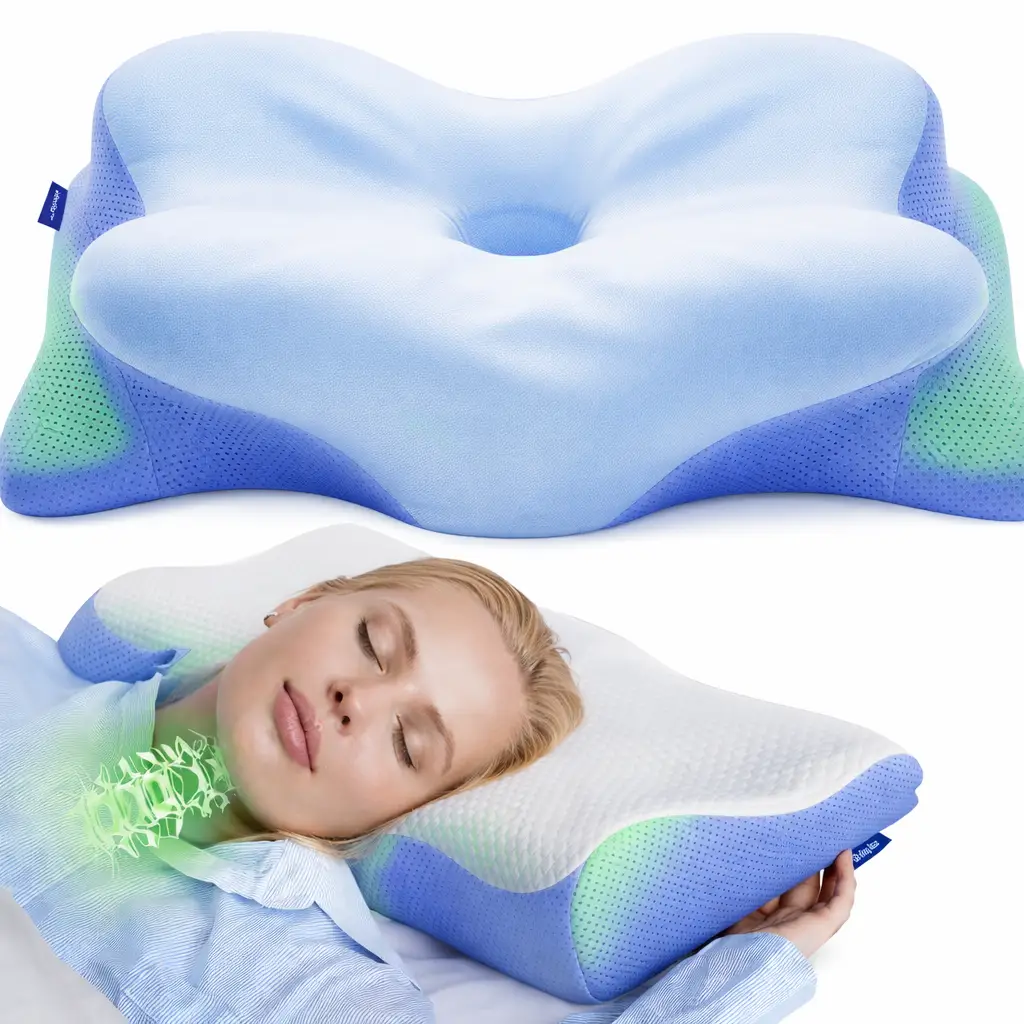
No single fill material is universally "best" — each behaves differently under weight and heat, which changes how well it supports your neck through a full night.
If you tend to sleep hot, also look at the outer cover, not just the fill. A breathable, hypoallergenic cover — the kind used on Derila Ergo Pillow — helps manage heat and resists dust mites, which matters if you're prone to allergies or night sweats.
Start from your primary sleep position: side sleepers generally need the most loft, back sleepers a medium amount, and stomach sleepers the least. Broader shoulders push side-sleeper loft needs higher.
For most side and back sleepers, yes — memory foam holds its contour under the head's weight instead of flattening the way loose fiber or feather fill often does, which keeps the neck supported for longer.
A well-matched pillow can reduce strain caused by poor sleep posture, but it isn't a medical treatment. If you have a diagnosed cervical condition or ongoing pain, talk with a doctor or physical therapist alongside any pillow change.
Give a firmer, contoured pillow at least five to seven nights. Your neck muscles need a short adjustment period, and the first night or two often feels different simply because the shape is new.
 Derila Ergo Pillow